


Oh Khai ke paan Banaras wala.
Khul jaye bandh akal ka tala!!
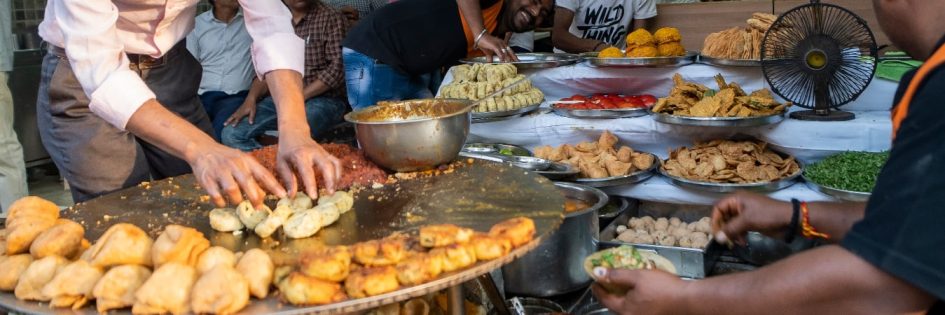
It’s Banaras. Here every street food tells a story of its own. Every crowded lane cheers with the clatter of steel plates, the hiss of hot oil, the aroma of spices dancing in the air, and the familiar warmth of food cooked the same way for generations. Street food here is not simply a local snack; it is culture, ritual, nostalgia, and everyday celebration served in a leaf bowl.
From sunrise kachoris to sunset chaats, the flavours of Varanasi shape how travelers feel the city. A well-planned food trail not only fills the stomach but enhances immersion, balances a sightseeing-heavy itinerary, and creates unforgettable recall value for any visitor.
Kashi Chat Bhandar – The Tangy Soul of Banaras
Kashi Chat Bhandar is not just a food stall—it is a rite of passage. Their legendary tamatar chaat (unique to Banaras) mixes mashed tomatoes, hing, garam masala, green chillies, desi ghee, and a secret spice blend that sparks instant addiction. Locally, it’s considered the “sweet-tangy firecracker” of the city.

Why It’s Famous
- Home to Banaras’s iconic tamatar chaat
- Uses a signature masala that brings a spicy depth
- Many years of heritage
Best For: Tamatar Chaat, Chura Matar, Aloo Tikki, Basket Chaat
Story Behind It
Banarasi tamatar chaat evolved during winters when tomato harvests overflowed. Local cooks began slow-cooking tomatoes with spices and ghee—creating a warm, comforting street dish that became a city staple. Today, no Varanasi food trail is complete without it.
Perfect Itinerary Fit
A great stop before attending the Dashashwamedh Ganga Aarti or during an evening heritage walk.
Read More: 169 Untold Stories of Kashi
Blue Lassi Shop – A Kulhad Full of Tradition
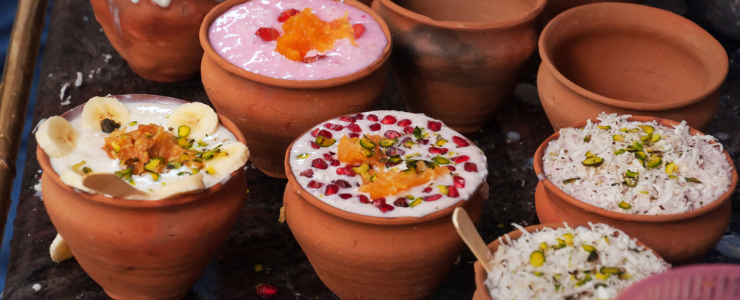
Blue Lassi Shop is a tiny, blue-walled space that has become a global sensation. The shop’s lassis are handmade the traditional way—hand-beaten yogurt, topped with thick malai, fresh fruits, saffron, or rose essence.
Why It’s Famous
- Varieties of lassi
- Served in kulhads for natural cooling and flavour
- Walls filled with notes from travelers across the world
Best For: Thick, hand-whisked lassi in earthen cups, fruit lassis
Story Behind It
Located en route to Manikarnika Ghat, the shop has long served cremation workers, boatmen, and priests. Its popularity grew through backpackers who discovered it during Old City walks. Today, it symbolizes the calm pause in the chaos of Varanasi.
Itinerary Tip
A refreshing break during temple circuits or morning bazaar explorations.
Ram Bhandar & Kachori Gali – The Sacred Breakfast Ritual
Morning in Varanasi begins with the smell of hot ghee. Ram Bhandar, alongside Kachori Gali, serves the city’s most traditional breakfast—fluffy kachoris stuffed with lentils and spices, paired with a tangy, tomato-rich aloo sabzi.
Why It’s Famous
- The most authentic Banarasi breakfast
- Always served fresh—kachoris run out by late morning
- Jalebis fried in desi ghee
Best For: Kachori-Sabzi, Jalebi, Chai
Story Behind It
Kachori-sabzi is not just breakfast; it’s a cultural moment. Locals eat it after sunrise rituals or before a Ganga boat ride. The recipe has remained unchanged for generations—proof that perfection doesn’t need innovation.
Perfect Itinerary Fit
Ideal before a sunrise boat ride or a morning cultural walk.
Baati Chokha Restaurant – A Taste of Purvanchal on a Platter
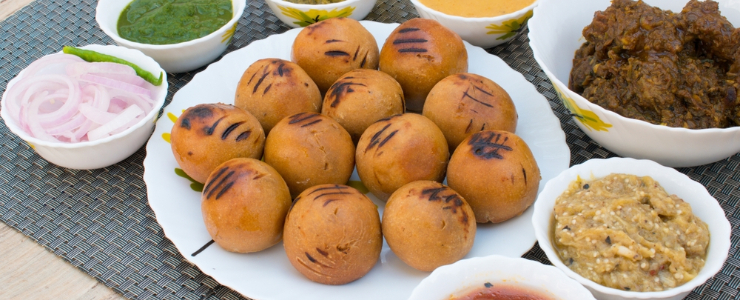
Baati Chokha Restaurant brings Purvanchal’s rustic flavours to the city. Baati—whole wheat dough balls baked over coal—are cracked open and drenched in ghee before serving with smoky chokha (made from roasted brinjal, tomatoes, garlic).
Why It’s Famous
- Authentic village-style cooking
- Loved by families, seniors, and groups
- Traditional ambience
Best For: Baati, Chokha, Dal, Traditional Thali
Story Behind It
This cuisine comes from rural Uttar Pradesh and Bihar. Historically, baati was a traveler’s food—easy to carry, long-lasting, and filling. Today it represents comfort, warmth, and home-cooked nostalgia.
Itinerary Use
A perfect lunch or dinner choice between sightseeing schedules.
Street-Food Zones – Where Varanasi Comes Alive
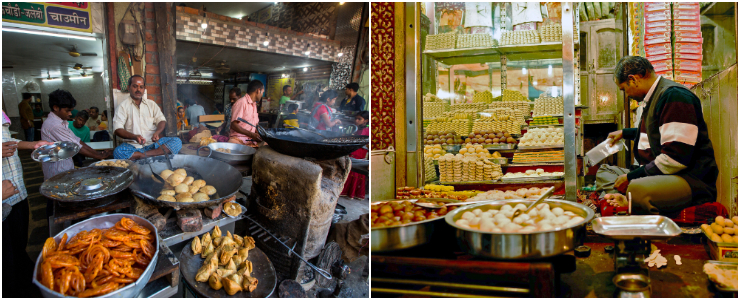
Beyond iconic shops, entire zones in the Old City turn into open-air kitchens every evening.
Must-Try Highlights
- Golgappe: Banarasi style—light, tangy, with hing-rich water
- Aloo Tikki: Crispy, stuffed, and served with sweet curd
- Malaiyyo: A winter delicacy made by “capturing morning dew”
- Jalebi: Deep-fried in ghee, dipped in saffron syrup
Story Behind the Food Zone Culture
Varanasi’s old markets were built around evening gatherings. Traders, priests, and pilgrims all ended their day with snacks. Over time, these zones became symbols of the city’s social life.
Who Will Enjoy It
Experiential travelers, food enthusiasts, photography lovers, and anyone who wants to see Varanasi at its most alive.
The Winter Miracle: Malaiyyo – Banaras’s Air-Like Dessert
Malaiyyo, also known as Nimish, is the city’s most poetic dish. Milk is kept overnight under the open sky during winter so dew settles on it. In the morning, it is hand-whipped into a saffron-tinged cloud and served with pistachios. Available only in winter and only in select bylanes, malaiyyo is a must-try for anyone visiting during Dev Deepawali Varanasi, Ganga Mahotsav, or winter festivals.
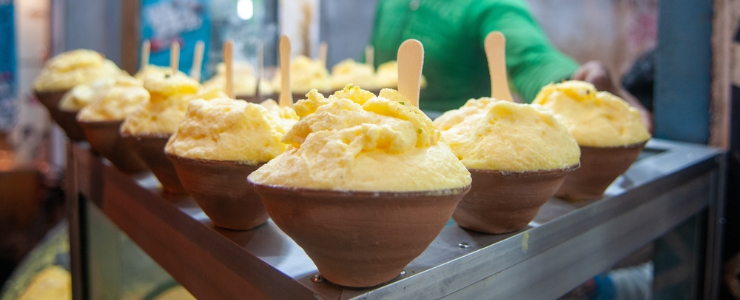
Why It’s Famous
- Seasonal and rare
- So airy it dissolves instantly
- Only found in a few Old City lanes
Best For: A dessert that feels like sweet air
Itinerary Tip
Best enjoyed during winter morning walks in the bylanes.
Cafés of Varanasi – Calm Corners Between the Chaos
Varanasi’s café culture is a pleasant surprise—calm, artistic spaces offering continental and fusion menus.
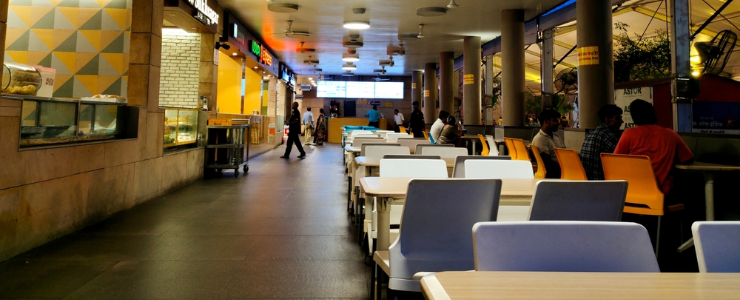
Where to Go
- Aadha-Aadha Café: A creative community hub
- Behind Yellow Doors: Trendy interiors, comfort food
- Open Hand Café: Quiet brunch spot loved by travelers
Why They Matter
- Good for mixed-preference groups
- Offer downtime between intense sightseeing
- Provide Western food options for global travelers
Other Iconic Banarasi Bites to Add to Any Itinerary
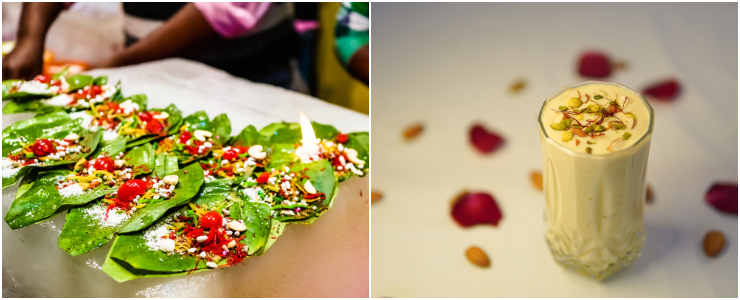
Banarasi Paan
A sweet digestive and a cultural ritual—chewing paan here is practically a heritage experience.
Thandai
Flavoured with saffron, almonds, and milk. During festivals like Holi or Maha Shivaratri, bhaang thandai becomes part of the tradition.
Litti-Chokha Variations
A close cousin of baati-chokha, found in street-side stalls.
Rabri and Gajar Halwa
Popular winter sweets that complete any Old City meal.
Latest Posts
- SATTE 2026 Key Takeaways: Destinations That Will Sell Most This Year

- 7 Romantic Destinations to Visit in February

- The Best Neighborhoods in Abu Dhabi: Your Ultimate 2025 Travel Guide

Final Bite
Varanasi’s flavours linger long after the trip ends. It’s the contrast—chaos and comfort, spice and sweetness, ancient recipes and modern travelers—that makes its cuisine unforgettable. Whether someone is exploring temples, witnessing Aarti, or simply wandering, the food binds all experiences together. And that is what makes its street food not just delicious—but deeply soulful.
FAQs:
What makes Varanasi’s street food different from other Indian cities?
Varanasi’s street food stands out because of its Purvanchali flavours, heavy hing notes, and recipes shaped by Varanasi temple tours, rituals, and ghats culture.
Is Varanasi street food vegetarian-friendly?
Yes. Varanasi is traditionally a vegetarian city, and most popular street foods—chaats, kachori-sabzi, sweets, lassi, tikki—are completely vegetarian. Non-vegetarian street food is limited to specific areas.
Do street food vendors in Varanasi accept digital payments?
Many do, especially in main areas like Godowlia, Assi, Lanka, and Dashashwamedh Road. However, smaller stalls in the narrow lanes may only accept cash. Carrying small change is useful.
What ingredients are used in authentic Banarasi Paan?
Typical ingredients include:
• Betel leaf (Banarasi variety)
• Gulkand (rose petal preserve)
• Saunf and elaichi
• Kattha and chuna (in traditional variants)
• Supari (optional)
• Tutti-frutti or dry fruits (in modern versions)
What’s the best time to enjoy street food in Varanasi?
Go early morning for kachori-sabzi and jalebi, and evening for chaat, golgappe, and snacks. Winter mornings are only for malaiyyo.

Shreya is a storyteller at heart, blending her love for travelling with her passion for crafting travel content. She brings a unique perspective to every piece of content. When she’s not writing, you’ll find her on a date with herself, enjoying the works of Austen or Hardy, getting lost in the world of classic literature.