



Spring sits in a sweet spot on the global travel calendar. Weather improves across hemispheres; major cultural festivals come alive, and pricing still stays below peak summer levels in many regions. For travel agents, this season is less about generic leisure and more about event-driven demand.

Data backs this shift. According to the IPX 1031 Travel Outlook Report, 19% of Americans are planning a spring break vacation with an average budget of $2,138. This signals strong intent, but more importantly, it highlights that travelers are willing to spend when there is a clear reason to travel.
Spring demand today is shaped by natural phenomena, cultural festivals, and time-bound experiences. Let’s break down five high-performing case studies that consistently drive bookings.
1. Time Sensitive Events That Drive Urgency
Cherry Blossom Season in Japan, also popularly called as Sakura season is often treated as a bucket-list trip. The major demand comes from two consumer behaviors, Fear of missing out (FOMO) and scarcity-driven demand.
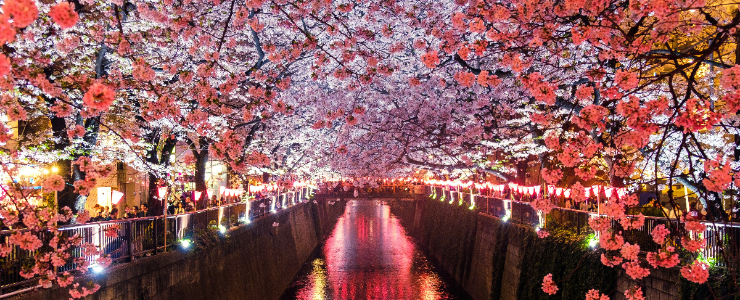
The bloom window runs from late March to early May, with peak season ranging from late March to mid-April in Tokyo and Kyoto.
It is one of the most powerful seasonal travel drivers globally, and the numbers prove it. As per Nippon.com, Japan recorded 42.7 million international visitors in 2025, a 15.8% increase from 2024. March and April alone saw over 3 million visitors each month, setting a global standard.
The craze of the festival is such that hotels in Kyoto and Osaka sell out 6–8 months in advance. While much of the cherry blossom trip remained limited to Tokyo and Kyoto until a few years back, now this time-sensitive spectacle has made explorers wander to places like Shizuoka, Osaka, Hiroshima, Aomori, and more destinations.
Pro Tip: It is a high-margin period and requires pre-booking well in advance.
2. Multi-Interest Packages That Extend Stay and Increase Spend
South Korea’s cherry blossom season is a crowd puller not just for the Sakura season but due to its strong K-pop culture. Both factors drive strong and high-margin packages, attracting travelers worldwide.

Running from late March to mid-April, the country attracts travelers from across the world for popular festivals like Jinhae and Yeouido Cherry Blossom Festival.
As per the data by Road Genius, 1.46 million visitors traveled to South Korea in April 2024 specifically for these cherry blossom events.
32% of younger travelers visit Hallyu for the K-pop culture, extending the average stay to 7-8 days. These numbers reflect a potential long-haul tourism market, where nature, entertainment, and culture are on just one trip.
Pro Tip: Build packages combining blossom viewing with K-pop, K-drama filming locations, and street food tours to increase appeal.
3. Limited-Time Visual Experiences That Convert Fast
Tulip season in Netherlands is a spectacle only few can afford to miss! It is a classic example of scarcity-driven travel demand.
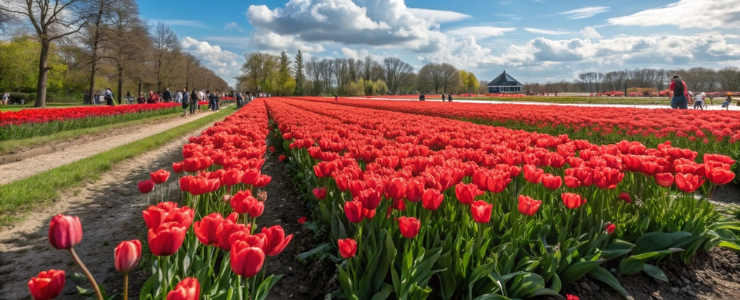
The season runs about 8 weeks from mid-March to mid-May, and that limited window creates immediate urgency, while the visual appeal makes it a high-conversion product.
As per the official sources, in 2025, Keukenhof alone attracted 1.4 million visitors, with a daily average of 26,500. Amongst which 80% of visitors are international, mainly from the US, Germany, France, and the UK.
The rise in demand for experiential travel has further increased the scope of positioning it as a top seller. Include cycling routes, Tulip Barn, and iconic Amsterdam experiences for the perfect trip.
Agent Tip: Offer bundled experiences beyond Keukenhof such as bike tours and farm visits to differentiate from standard packages.
4. Cultural Events That Attract Larger Footfall
Spain is world-renowned for its iconic cultural festivals and Semana Santa stands high in that list. It is one of the most culturally immersive spring events globally.

Recognized as Intangible Cultural Heritage by UNESCO, it brings huge footfalls and sharp spike to cities like Seville, Málaga, and Granada.
Data reveals that Spain is expected to receive 15 million international tourists over the Easter period in 2026, showing a 9% increase. At the same time, searches for beach destinations rose by 59%, indicating that travelers are combining culture with leisure.
This event alone combines religion, culture, and spectacle, attracting both cultural travelers and leisure tourists.
Agent Tip: Sell early with a strong urgency angle. Pair Semana Santa with beach extensions to capture dual-interest travelers.
5. Large-Scale Festivals That Boost Travel Demand
Songkran Festival of Thailand has moved far beyond a traditional festival. It is now a large-scale tourism driver and has been recognized as an Intangible Cultural Heritage by UNESCO.

The main celebration runs from April 13 to 15, but activity extends across the month. Cities like Bangkok and Chiang Mai have become major hotspots.
In 2024, the festival generated 140.3 billion baht, and projections for 2025 stood at 134.6 billion baht with visitor growth from markets like India, China, and Malaysia has been strong.
This is not just a festival. It’s a mass participation event, blending culture with entertainment.
Agent Tip: Focus on short-haul markets and group travel. Songkran works best when positioned as a shared experience rather than a solo trip.
Latest Posts
- Is Egypt Worth Visiting in 2026? Here’s Everything You Need to Know

- Travel Bytes Weekly Round-Up: 4 Big Travel News Stories You Should Know

- Best Things to Do in Hong Kong: Top Attractions, Hidden Gems & Travel Guide

Conclusion:
For travel agents, the next step is to turn these moments into meaningful, bookable journeys. Start planning early, shape experiences around what makes each season special, and guide travelers toward trips they might miss if they wait.
Comment down if you want to read more such case-study based pieces.
FAQs:
How can agents stand out when selling widely available events like cherry blossoms or festivals?
Differentiate through niche add-ons, unique routes, or curated experiences that go beyond standard itineraries.
What’s the best way to market time-sensitive spring travel without discounting heavily?
Lean into limited availability, fixed travel windows, and storytelling around the experience to create urgency instead of competing on price.
How do I decide which spring events are worth investing inventory in?
Look at repeat demand patterns, visa ease, and air connectivity from your core markets. Prioritize events that consistently convert, not just trends.
What’s the smartest way to handle clients who enquire late for high-demand events?
Keep backup destinations and flexible date options ready so you can still close the sale instead of losing the lead.
How can I avoid price resistance during peak spring events?
Position the trip around the experience and timing, not just inclusions. Clients are more willing to pay when they understand what they might miss.

Hi! I am Tanisha Agarwal, a passionate content writer with a flair for storytelling and a zeal for creating powerful content. With a background in mass communication, I love to create engaging and informative content that captivates readers, brings ideas to life, and caters to mass audiences. Words have the ability to move rocks, and I wish to do the same.