

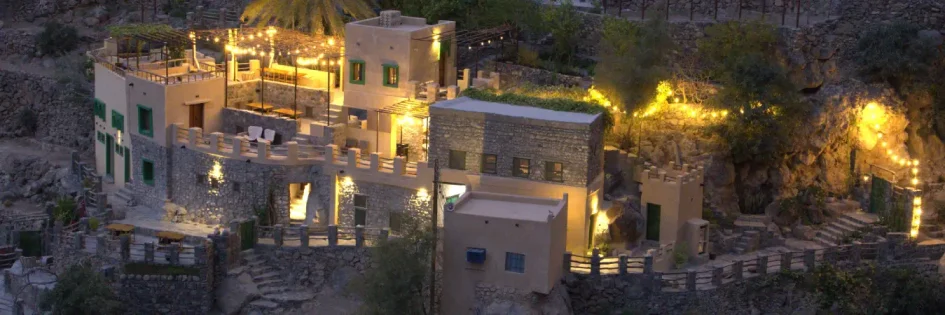

Oman is known for its forts, desert landscapes and beautiful coastline, but there is much more to explore beyond its popular attractions. Head towards the Hajar Mountains and you will find old villages, stone houses, and farming terraces that tell the story of how people lived in these rugged surroundings.
One such village is Wajmah, located in the Wadi As Sahtan region near Rustaq. Once affected by water shortages and the decline of farming, the village is now seeing parts of its heritage restored. At its heart is Al Abri Home, a 130-year-old family house that gives visitors a glimpse of traditional life in Oman’s mountains.
Here are the best things to see and do in Wajmah, all within a short walk of Al Abri Home:
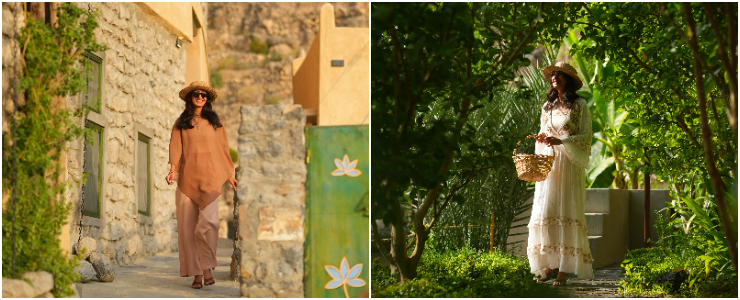
1. Traditional stone pathways
Walk along narrow mountain paths, steps, and traditional stone buildings to see how the village was built.
This is one of the best ways to see the village and get close to the setting. The narrow mountain paths and steps are uneven, so be sure to wear appropriate shoes for walking.
2. Abandoned agricultural terraces
Look at the remains of dry-stone agricultural terraces built into the slope of the mountain. These reflect the traditional farming systems used by the people who lived in this mountain village.
3. Landscapes with scarce water resources
Water shortages meant that this part of the village was abandoned. The restoration project has focused on this area, helping to bring the village back to life.
4. Views of the mountain and village walks
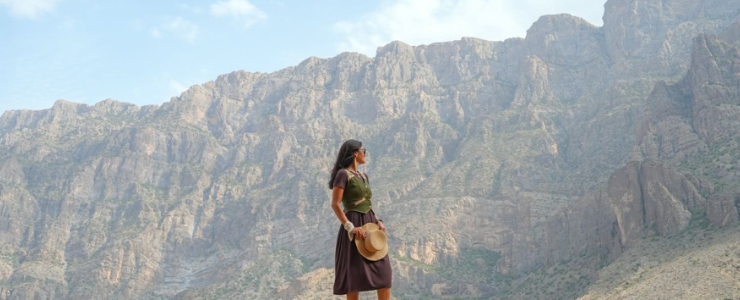
Wajmah is a great place to stop and observe the mountainous terrain, rocky formations, and distant viewpoints. Walks follow the mountain contours but are on uneven ground, so be sure to wear sturdy shoes.
Stay at Al Abri Home: 130-year-old Omani house
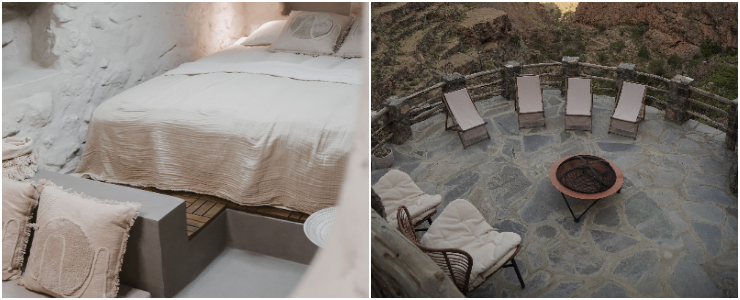
The heart of Wajmah’s restoration project is Al Abri Home, an old Omani house which has been carefully restored using local materials and traditional methods.
Rather than a hotel, this is more like a private house with comfortable furnishings, offering a unique insight into Omani mountain village life.
Al Abri Home has ten different guest rooms, all of which are quite different in style and size. This is not a typical luxury hotel – the guest rooms vary from large to small, with some only having shared bathrooms. The entire experience is part of the accommodation, so be prepared for a stay that is very different from sleeping in a conventional hotel.
Al Abri Home highlights
Al Abri Home has ten guest rooms, most of which have simple, rustic furnishings. Here are some of the main features of the rooms:
• Ten guest rooms: Eight double rooms and two single cave rooms
• Maximum capacity: Up to 18 guests
• Room sizes: Approximately 4m squares up to 18m squares
• Bathrooms: Mostly exterior or shared bathrooms, with a few private bathrooms
• Star Room: Private exterior bathroom and large private terrace
• Cave rooms: Small, unusual rooms carved into the rock face
Al Abri Home is definitely not for everyone. If you are looking for large rooms, private en-suite bathrooms, and five-star luxury, then it is not for you. However, if you are interested in traditional Omani culture, rustic mountain village accommodations and are willing to compromise, then Al Abri Home could be a good option for you.
Getting to Wajmah, Oman
The journey to Wajmah is part of the experience. From Muscat it is about a two-hour drive (160 km). However, the final stage of the journey consists of an off-road mountain track of approximately 4.2 km, requiring a four-wheel drive vehicle. There is also a steep and uneven 10 to 15-minute walk to the entrance of the property.
The mountain track leading to Al Abri Home should not be considered a typical access road to a hotel. Make sure that you allow enough travel time and that you have an appropriate vehicle.
Five Other Mountain Villages to Explore in Oman
Wajmah is just one of the numerous mountain villages in Oman, all of which have their own particular landscapes and features. If you have extra time or are planning a longer trip to visit the mountain regions of Oman, then these five villages are worth looking at.
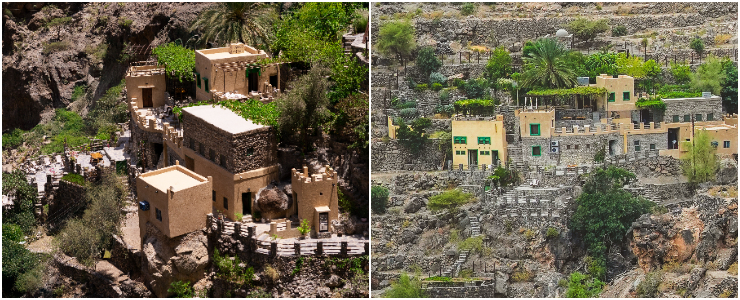
1. Misfat Al Abriyeen
The village is well known for its traditional stone houses, its narrow streets, its date palm groves, and its cultivated agricultural terraces. The local farmers continue to grow crops by means of the traditional falaj irrigation systems, a practice which interests historians as well as people who are interested in the local culture.
2. Wakan
Wakan is a mountain village similar to its harsh terrain and the slopes that have been cultivated. When you walk along the mountain contours, you can see rocky outcrops, seasonal plants, and fine views over the landscape. The conditions may change quickly, there being cold nights after warm days and at times washouts causing the roads to become impassable.
3. Bilad Sayt
The village is situated in the Hajar Mountains, an area known for its natural scenery featuring rocky outcrops and traditional villages. It is a favorite destination among photographers and people who are interested in the local culture. Since the mountainous landscape is difficult to navigate, it is important that you have a suitable four-wheel drive vehicle.
4. Al Hamra
The village of Al Hamra is famous for its traditional domestic architecture, which includes multi-storey houses made of mud brick and decorative ceiling trusses of palm wood. Looking around in the area gives a view of traditional Omani domestic life and the usual scenes in the village streets. The fact that the paths are rough and involve steep ascents contributes to the rural character of this mountain village.
5. Jabal Akhdar, known as the Green Mountain, is well known for its magnificent mountain views and scenery. Terraced orchards containing pomegranates, apricots and roses cover this high plateau and provide excellent views. The region is suitable when one wishes to combine a trip with visits to the mountain landscape and the popular trekking and walking facilities.
When is the best time to visit Wajmah?
It is best to go to Wajmah during the cooler part of the year when the average daytime temperature is about 25C. June through September, which are the summer months, can be rather hot and make walking and exploring quite uncomfortable. October to April are the ideal months to visit, even though temperatures can vary according to altitude and local conditions.
Consider the following before visiting Wajmah:
- When planning your walks and activities, take the weather into account.
- For mountain roads, it’s important to check the road conditions and to have a suitable four-wheel drive vehicle.
- Shoes and water: Make sure to have comfortable walking shoes and enough water to remain hydrated.
- It’s a good idea to take the time to explore this mountain village rather than treating it as a short break en route to some other destination.
FAQs
Where is Wajmah located?
Wajmah is a historic mountain village in Wadi As Sahtan, within the wilayat of Rustaq in Oman’s Hajar Mountains. Reaching the village involves a mountain drive and a final walk along uneven pathways.
What is Al Abri Home?
Al Abri Home is a restored, approximately 130-year-old Omani family house in Wajmah. It has ten guestrooms, including two compact cave rooms, and retains traditional architectural features alongside modern comforts.
Is Wajmah suitable for all travellers?
Wajmah is best suited to travellers comfortable with uneven terrain and a short mountain walk. The off-road approach, stone steps and bathroom arrangements may not suit everyone, particularly guests with reduced mobility.
Which mountain villages can be explored in Oman?
Misfat Al Abriyeen, Wakan Village, Bilad Sayt, Al Hamra Old Village and Jabal Akhdar are worthwhile options for exploring Oman’s mountain landscapes, traditional architecture and agricultural heritage.
